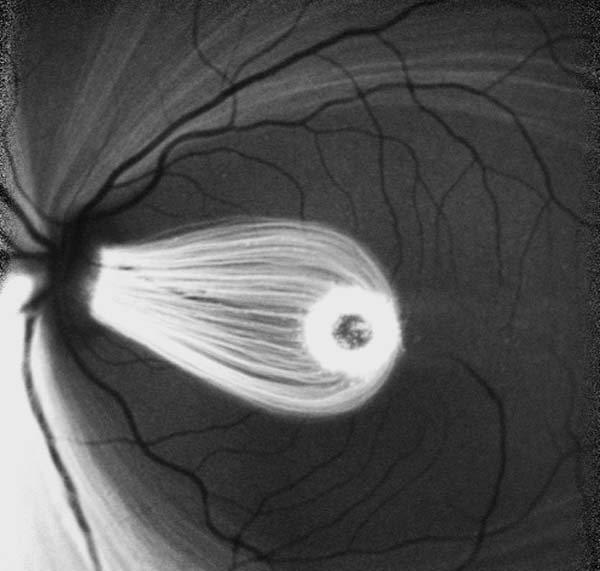
Dose-response characteristics of retinal inactivation due to intravitreal injections of tetrodotoxin in nonhuman primates [PDF 7.4 MB]
Kwaw RJ, Duffy KR, Meng H, Jones RW, Zehra Z, Heynen AJ, Lawrence MS, Tychsen L, Bear MF, Frishman LJ, Patel NB, Das VE. Invest Ophthalmol Vis Sci. 2026;67(6):12.
African green monkeys respond to synthetic aβ oligomers with persistent Alzheimer’s-like activation [PDF 2.6 MB]
Brown BRP, Li X, Grasty MR, Lopez IR, Dzigurski S, Geradi MN, Weed MR, Elsworth JD, Lawrence M, Gürsoy G, Miranker AD. bioRxiv. 2025. doi:10.1101/2025.10.08.678256.
Automated assessment of retinal vascular integrity across species [PDF 5.3 MB]
O’Callaghan J, Hudson N, Hanley N, Reddy A, Naylor A, Hopkins A, O’Riordan M, O’Leary F, Harford D, Holohan R, Nevrov D, Demmons E, Lawrence MS, Doyle SL, Westenskow PD, Cahill M, Campbell M. Invest Ophthalmol Vis Sci. 2025;66(15):46.
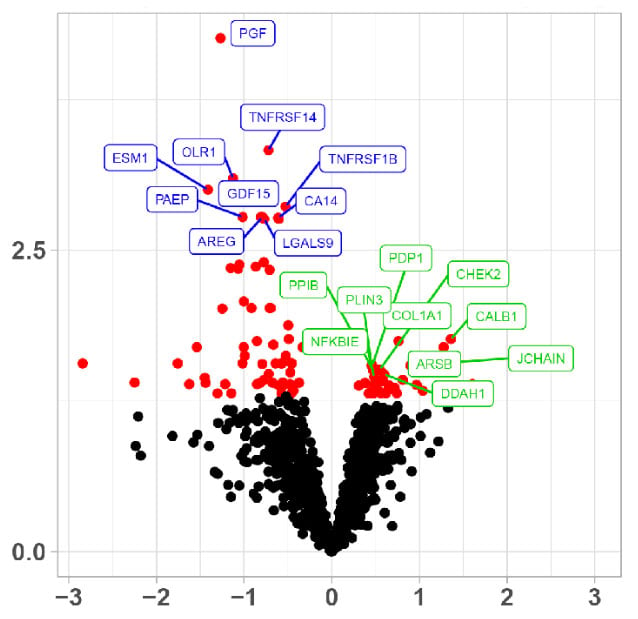
Proteomic signatures of epigenetic age in African green monkey cerebrospinal fluid and plasma [PDF 5.4 MB]
Elsworth JD, Neutzner A, Roux J, Gordevicius J, Milciute M, Dzikiti L, Wakeman DR, Danielsson B, Agca C, Lawrence MS. Aging Cell. 2025;24(10):e70168.
Pharmacological blocking of microfibrillar-associated protein 4 reduces retinal neoangiogenesis and vascular leakage [PDF 4.6 MB]
Schlosser A, Pilecki B, Allen C, Benest AV, Lynch AP, Hua J, Ved N, Blackley Z, Andersen TL, Hennig D, Graversen JH, Moller S, Skallerup S, Ormhoj M, Lange C, Agostini HT, Grauslund J, Heegaard S, Dacheva I, Koss M, Hu W, Iglesias B, Lawrence MS, Beck HC, Steffensen LB, Laursen NS, Andersen GR, Holmskov U, Bates DO, Sorensen GL. Mol Ther. 2025;33:1048-72.
Biodistribution of polymeric nanoparticles following in utero delivery to a nonhuman primate [PDF 1 MB]
Eaton DA, Lynn AY, Surprenant JM, Deschenes EI, Guerra ME, Rivero R, Yung NK, O’Connor M, Glazer PM, Bahtiyar MO, Saltzman WM, Stitelman DH. Biomed Hub. 2024;10(1):23-32.
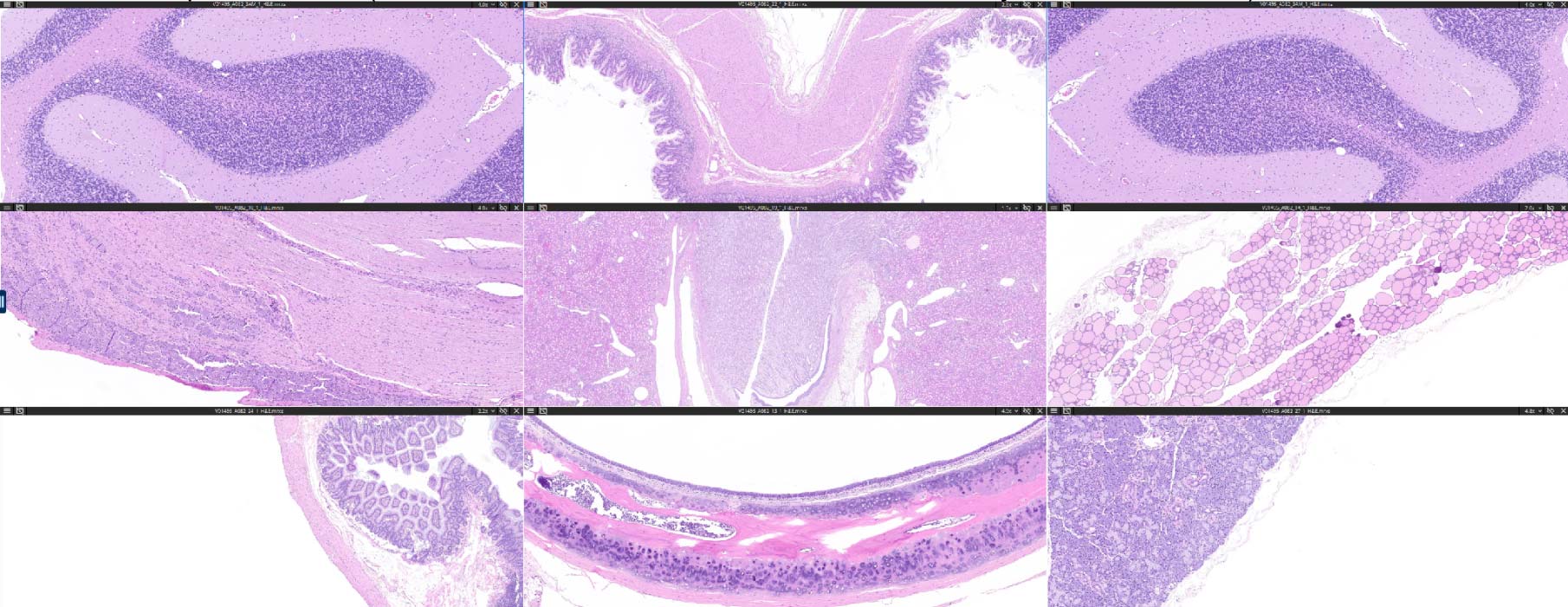
Toxicologic pathology forum: opinion on interpretive challenges for procedure-related effects associated with direct central nervous system delivery of oligonucleotides to rodents, dogs, and nonhuman primates [PDF 1.9 MB]
Berman-Booty LD, Klein SK, Mazur C, Schroeder J, Korte S, Ludwig FT, Romeike A, Bolon B, Grieves JL. Toxicol Pathol. 2024:1-15.
Naturally occurring histological findings and Alzheimer’s-like pathology in the brain of aging African green monkeys (Chlorocebus sabaeus) [PDF 5 MB]
Corey TM, Illanes O, Lawrence M, Perez SE, Liddie S, Callanan JJ. J Comp Neurol. 2023;531:1276-98.
A novel device for suprachoroidal drug delivery to retina: evaluation in nonhuman primates [PDF 1.6 MB]
Rotenstreich Y, Sher I, Lawrence M, Mangelus M, Ingerman A, Barak Y. Transl Vis Sci Technol. 2023;12(6):3.
Tolerability and tropism of recombinant adeno-associated virus vectors in the African green monkey (Chlorocebus sabaeus) anterior chamber [PDF 4.2 MB]
Chern KJ, Issac KZ, Gumbs ZD, O’Connor ME, Lawrence MS, Lipinski DM. Gene Ther. 2023;30:714-22.
Matrix metalloproteinase-3 (MMP-3)-mediated gene therapy for glaucoma [PDF 1.6 MB]
O’Callaghan J, Delaney C, O’Connor M, van Batenburg-Sherwood J, Schicht M, Lütjen-Drecoll E, Hudson N, Ni Dhubhghaill S, Humphries P, Stanley C, Keravala A, Chalberg T, Lawrence MS, Campbell M. Sci Adv. 2023;9(16):eadf6537.
Evaluation of the dose-dependent inflammatory response and no-observable adverse effect level of intravitreal endotoxin in the African green monkey [PDF 2.4 MB]
Corey TM, Woodley VV, O’Connor M, Doyle S, Shrader S, Phipps C, Isaac K, Lawrence M. Transl Vis Sci Technol. 2022;11(8):17.
Intrathecal amyloid-beta oligomer administration increases tau phosphorylation in the medial temporal lobe in the African green monkey: a nonhuman primate model of Alzheimer’s disease [PDF 3.3 MB]
Wakeman DR, Weed MR, Perez SE, Cline EN, Viola KL, Wilcox KC, Moddrelle DS, Nisbett EZ, Kurian AM, Bell AF, Pike R, Jacobson PB, Klein WL, Mufson EJ, Lawrence MS, Elsworth JD. Neuropathol Appl Neurobiol. 2022;48(4):e12800.
Elezanumab, a human anti-RGMa monoclonal antibody, promotes neuroprotection, neuroplasticity, and neurorecovery following a thoracic hemicompression spinal cord injury in non-human primates [PDF 14.8 MB]
Jacobson PB, Goody R, Lawrence M, Mueller BK, Zhang X, Hooker BA, Pfleeger K, Ziemann A, Locke C, Barraud Q, Droescher M, Bernhard J, Popp A, Boeser P, Huang L, Mollon J, Mordashova Y, Cui YF, Savaryn JP, Grinnell C, Dreher I, Gold M, Courtine G, Mothe A, Tator CH, Guest JD. Neurobiol Dis. 2021;155:105385.
Primate model of chronic retinal neovascularization and vascular leakage [PDF 6.6 MB]
Patel C, Goody R, Hu W, Kurian A, James D, Torres R, Christie LA, Hohman T, Lawrence MS. Exp Eye Res. 2020;195:108031.
Dysregulated claudin-5 cycling in the inner retina causes retinal pigment epithelial cell atrophy [PDF 42.6 MB]
Hudson N, Celkova L, Hopkins A, Greene C, Storti F, Ozaki E, Fahey E, Theodoropoulou S, Kenna PF, Humphries MM, Curtis AM, Demmons E, Browne A, Liddie S, Lawrence MS, Grimm C, Cahill MT, Humphries P, Doyle SL, Campbell M. JCI Insight. 2019;4(15).
Characterization of glucose-stimulated insulin release protocols in African green monkeys (Chlorocebus aethiops) [PDF 1.2 MB]
Liddie S, Okamoto H, Gromada J, Lawrence MS. J Med Primatol. 2019;48:10-21.
Preclinical evaluation of ADVM-022, a novel gene therapy approach to treating wet age-related macular degeneration [PDF 1.3 MB]
Grishanin R, Vuillemenot B, Sharma P, Keravala A, Greengard J, Gelfman C, Blumenkrantz M, Lawrence MS, Hu W, Kiss S, Gasmi M. Mol Ther. 2019;27:118-29.
Biodegradable scaffolds promote tissue remodeling and functional improvement in non-human primates with acute spinal cord injury [PDF 4.5 MB]
Slotkin JR, Pritchard CD, Luque B, Ye J, Layer RT, Lawrence MS, O’Shea TM, Roy RR, Zhong H, Vollenweider I, Edgerton VR, Courtine G, Woodard EJ, Langer R. Biomaterials. 2017;123:63-76.
Enhancement of outflow facility in the murine eye by targeting selected tight-junctions of Schlemm’s canal endothelia [PDF 1.8 MB]
Tam LC, Reina-Torres E, Sherwood JM, Cassidy PS, Crosbie DE, Lütjen-Drecoll E, Flügel-Koch C, Perkumas K, Humphries MM, Kiang AS, O’Callaghan J, Callanan JJ, Read AT, Ethier CR, O’Brien C, Lawrence MS, Campbell M, Stamer WD, Overby DR, Humphries P. Sci Rep. 2017;7:40717.
Upregulation of haploinsufficient gene expression in the brain by targeting a long non-coding RNA improves seizure phenotype in a model of Dravet syndrome [PDF 3.8 MB]
Hsiao J, Yuan TY, Tsai MS, Lu CY, Lin YC, Lee ML, Lin SW, Chang FC, Liu Pimentel H, Olive C, Coito C, Shen G, Young M, Thorne T, Lawrence M, Magistri M, Faghihi MA, Khorkova O, Wahlestedt C. EBioMedicine. 2016;9:257-77.
The peptidomimetic Vasotide targets two retinal VEGF receptors and reduces pathological angiogenesis in murine and nonhuman primate models of retinal disease [PDF 14.1 MB]
Sidman RL, Li J, Lawrence M, Hu W, Musso GF, Giordano RJ, Cardó-Vila M, Pasqualini R, Arap W. Sci Transl Med. 2015;7:309ra165.
Regulation of the apolipoprotein gene cluster by a long noncoding RNA [PDF 1.8 MB]
Halley P, Kadakkuzha BM, Faghihi MA, Magistri M, Zeier Z, Khorkova O, Coito C, Hsiao J, Lawrence M, Wahlestedt C. Cell Rep. 2013;6:222-30.
Pharmacological inhibition of a microRNA family in nonhuman primates by a seed-targeting 8-mer antimiR [PDF 0.8 MB]
Rottiers V, Obad S, Petri A, McGarrah R, Lindholm MW, Black JC, Sinha S, Goody RJ, Lawrence MS, deLemos AS, Hansen HF, Whittaker S, Henry S, Brookes R, Najafi-Shoushtari SH, Chung RT, Whetstine JR, Gerszten RE, Kauppinen S, Näär AM. Sci Transl Med. 2013;5(212):212ra162.
The use of the African green monkey as a preclinical model for ocular pharmacokinetic studies [PDF 0.3 MB]
Glogowski S, Ward KW, Lawrence MS, Goody RJ, Proksch JW. J Ocul Pharmacol Ther. 2012;28:290-8.
Antiangiogenic activity of aganirsen in nonhuman primate and rodent models of retinal neovascular disease after topical administration [PDF 3.9 MB]
Cloutier F, Lawrence M, Goody R, Lamoureux S, Al-Mahmood S, Colin S, Ferry A, Conduzorgues JP, Hadri A, Cursiefen C, Udaondo P, Viaud E, Thorin E, Chemtob S. Invest Ophthalmol Vis Sci. 2012;53:1195-203.
Optimization of laser-induced choroidal neovascularization in African green monkeys [PDF 1.1 MB]
Goody RJ, Hu W, Shafiee A, Struharik M, Bartels S, Lopez FJ, Lawrence MS. Exp Eye Res. 2011;92:464-72.
Clinical chemistry and hematology values in a Caribbean population of African green monkeys [PDF 0.2 MB]
Liddie S, Goody RJ, Valles R, Lawrence MS. J Med Primatol. 2010;39:389-98.
Establishing a model spinal cord injury in the African green monkey for the preclinical evaluation of biodegradable polymer scaffolds seeded with human neural stem cells [PDF 4.4 MB]
Pritchard CD, Slotkin JR, Yu D, Dai H, Lawrence MS, Bronson RT, Reynolds FM, Teng YD, Woodard EJ, Langer RS. J Neurosci Methods. 2010;188:258-69.
Exploration of the African green monkey as a preclinical pharmacokinetic model: oral pharmacokinetic parameters and drug-drug interactions [PDF 0.8 MB]
Ward KW, Coon DJ, Magiera D, Bhadresa S, Struharik M, Lawrence MS. Xenobiotica. 2009;39:266-72.
LNA-mediated microRNA silencing in non-human primates [PDF 0.6 MB]
Elmén J, Lindow M, Schütz S, Lawrence M, Petri A, Obad S, Lindholm M, Hedtjärn M, Hansen HF, Berger U, Gullans S, Kearney P, Sarnow P, Straarup EM, Kauppinen S. Nature. 2008;452:896-9.
Exploration of the African green monkey as a preclinical pharmacokinetic model: intravenous pharmacokinetic parameters [PDF 1.8 MB]
Ward KW, Coon DJ, Magiera D, Bhadresa S, Nisbett E, Lawrence MS. Drug Metab Dispos. 2008;36:715-20.




 Historical biomedical applications of NHP test systems (and other animal model systems) have been driven by availability of animals and background control data.